What Are the Cheapest Rolex Watches You Can Buy?
If you want a Rolex without spending five figures, you have more choices than you might expect. The key is knowing the difference between current Rolex retail prices and the often lower or higher prices found on the pre-owned market. 
Among current models, the Oyster Perpetual is the natural starting point. Rolex currently lists the Oyster Perpetual 28 at $6,200, the 31 at $6,300, the 34 at $6,400, the 36 at $6,750, and the 41 at $7,050 in the U.S.
That makes the Oyster Perpetual the most straightforward answer to the question, “What is the cheapest new Rolex?” But it isn’t the only relatively accessible option. The Datejust, Explorer, Air-King, and even the no-date Submariner can all be considered depending on your budget and what you want from the watch.
What Is the Cheapest New Rolex?
The Rolex Oyster Perpetual 28, at a current U.S. retail price of $6,200, is among the least expensive new Rolex watches in the company’s lineup. The larger Oyster Perpetual models remain relatively affordable by Rolex standards, topping out at $7,050 for the 41mm version.
The Oyster Perpetual is also arguably the purest expression of what makes Rolex appealing. Its design is simple: an Oyster case, three-hand display, automatic movement, and Oyster bracelet. There is no date window, rotating dive bezel, or chronograph to add complexity or cost.
The current Oyster Perpetual 41, for example, uses Rolex’s caliber 3230, has a stated power reserve of approximately 70 hours, is water-resistant to 100 meters (330 feet), and carries Rolex’s Superlative Chronometer certification.
In other words, “entry-level” doesn’t mean stripped-down in the usual sense. It means Rolex has concentrated the watch on the essentials.
The 10 Most Accessible Rolex Watches to Consider
| Model | Approx. U.S. retail price | What makes it appealing |
|---|---|---|
| Oyster Perpetual 28 | $6,200 | Lowest-priced current Rolex |
| Oyster Perpetual 31 | $6,300 | Compact everyday option |
| Oyster Perpetual 34 | $6,400 | Mid-size, understated design |
| Oyster Perpetual 36 | $6,750 | Classic 36mm proportions |
| Oyster Perpetual 41 | $7,050 | Larger modern size |
| Datejust 31 | $7,700 | Adds Rolex’s signature date display |
| Explorer 36 | $7,900 | Sportier design and strong legibility |
| Air-King | $8,150 | Aviation-inspired dial |
| Lady-Datejust 28 | $9,150 | Smaller Datejust with a dressier profile |
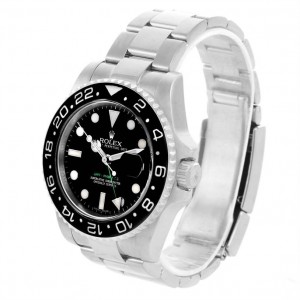
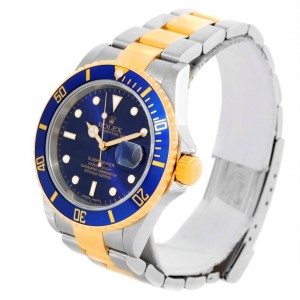
| Submariner | $10,050 | Iconic professional dive-watch design |
Prices are U.S. Rolex retail prices for representative current configurations and can change. Taxes, availability, dial choices, precious metals, and other options can affect the final price.
1. Oyster Perpetual 28 — $6,200
The Oyster Perpetual 28 is the lowest-priced current Rolex in the manufacturer’s U.S. lineup, making it the clearest choice for shoppers whose priority is getting a new Rolex for the least amount of money.
Its 28mm Oystersteel case gives it a relatively small footprint, while the automatic movement and Oyster construction provide the basic mechanical and durability features associated with the brand.
The main consideration is size. A 28mm watch can look quite different from the larger Rolex watches that dominate popular culture. For someone who prefers a smaller watch, that’s an advantage; for someone accustomed to 40mm-plus sports watches, it may feel too small.
2. Oyster Perpetual 31 — $6,300
The Oyster Perpetual 31 costs only $100 more than the 28mm version at current U.S. retail pricing.
That small difference makes the 31 worth considering if the 28mm case feels too diminutive. Like the rest of the Oyster Perpetual range, it keeps the design deliberately simple, which makes it easier to wear casually or in a more formal setting.
3. Oyster Perpetual 34 — $6,400
The 34mm Oyster Perpetual occupies a useful middle ground. It’s still relatively compact, but its proportions can work well for someone looking for a restrained everyday watch rather than a conspicuous luxury piece. Rolex currently lists the Oyster Perpetual 34 in Oystersteel at $6,400.
The simplicity is part of the appeal. There are no unnecessary complications competing for attention, so the dial and case design do most of the work.
4. Oyster Perpetual 36 — $6,750
For many buyers, the Oyster Perpetual 36 is the sweet spot in the lineup.
At $6,750, it costs more than the smaller versions but remains below $7,000. The 36mm case also has a long history in traditional watch sizing, giving it a less oversized appearance than many contemporary sports watches.
The model uses Rolex’s automatic caliber 3230 and offers approximately 70 hours of power reserve.
5. Oyster Perpetual 41 — $7,050
The Oyster Perpetual 41 is the largest standard Oyster Perpetual and currently costs $7,050 in the U.S.
The additional case diameter gives the simple design a more contemporary presence. Despite its larger size, it retains the same basic formula: three hands, an Oystersteel case and bracelet, automatic movement, and no date complication.
For buyers who like the Oyster Perpetual concept but find 36mm too small, the 41 is the obvious alternative.
6. Datejust 31 — $7,700
The Datejust takes the basic Rolex formula a step further by adding the complication that defines the model: a date display.
Rolex currently lists Oystersteel Datejust 31 configurations from $7,700 in the U.S.
The Datejust also gives buyers considerably more room to personalize the watch through different dials, bezels and bracelets. That flexibility is one reason the model has remained a central part of Rolex’s catalog for decades.
The trade-off is price. The least expensive Datejust configurations cost substantially more than the entry-level Oyster Perpetual models.
7. Explorer 36 — $7,900
The Explorer 36 is a particularly interesting alternative to the Oyster Perpetual.
Rolex lists the stainless-steel Explorer 36 at $7,900. Its black dial uses the familiar 3, 6 and 9 numerals, with luminescent material designed to improve visibility.
The Explorer also has a stronger tool-watch identity than the Oyster Perpetual. Its design is rooted in Rolex’s history of watches associated with exploration, so it feels sportier without becoming as bulky or specialized as a Submariner.
8. Air-King — $8,150
The Air-King is another relatively accessible Rolex sports model. The current 40mm Oystersteel version is listed at $8,150 in the U.S.
Its black dial is more distinctive than the Oyster Perpetual’s, combining large 3, 6 and 9 numerals with a prominent minute scale inspired by navigational time readings. Rolex traces the model’s identity to its aeronautical heritage.
It also uses Rolex’s caliber 3230 and offers approximately 70 hours of power reserve.
9. Lady-Datejust 28 — $9,150
The Lady-Datejust shouldn’t be overlooked simply because it has a smaller case.
A current 28mm Lady-Datejust in Oystersteel and white gold is listed by Rolex at $9,150. The model combines the familiar Datejust date display with a fluted bezel and a smaller case.
There are also less expensive Lady-Datejust configurations. Rolex’s current catalog includes an Oystersteel version priced at $7,800, illustrating why shoppers should compare the exact configuration rather than assuming every version of a model has the same price.
10. Submariner — $10,050
The Submariner is where the definition of “affordable Rolex” starts to become a stretch.
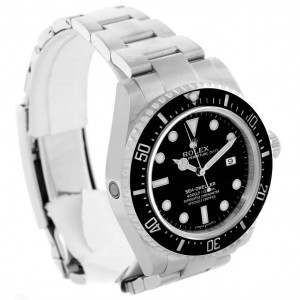
The current no-date Submariner in Oystersteel is listed at $10,050 in the U.S. That’s significantly more than an Oyster Perpetual, but the Submariner gives you one of the most recognizable professional-watch designs in the industry.
The current model is water-resistant to 300 meters (1,000 feet) and uses a unidirectional rotating bezel with a 60-minute scale. Its caliber 3230 provides approximately 70 hours of power reserve. 
What About Vintage Rolex Watches?
This is where the answer becomes more complicated.
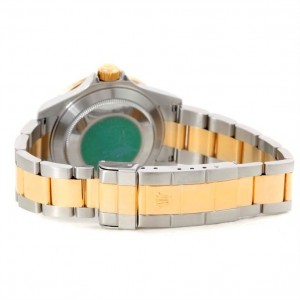
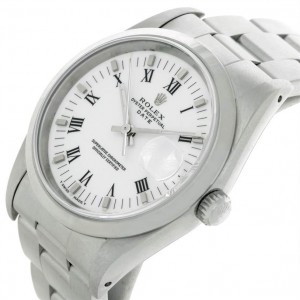
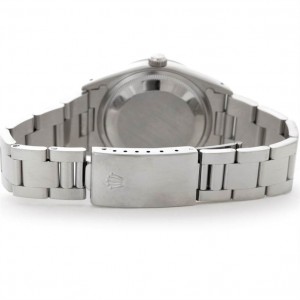
The original Cheapism article included watches such as the Air-King reference 5500 and Datejust 16234, which can sometimes be found for substantially less than new Rolex sports models on the pre-owned market.
Those watches can still be interesting buys, but they shouldn’t be placed on the same price list as current Rolex models.
A vintage Rolex’s price depends on factors such as:
- Reference and production period
- Condition and originality
- Service history
- Dial and hands
- Bracelet condition
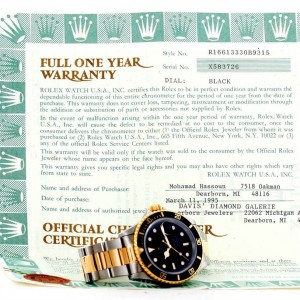
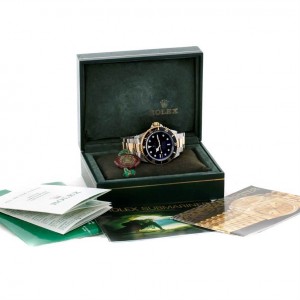
- Box and papers
- Provenance
- Seller reputation
A lower sticker price can also come with higher uncertainty. An older mechanical watch may need servicing, and replacing an incorrect or damaged component can become expensive.
For that reason, “cheapest Rolex” and “cheapest Rolex to own” aren’t necessarily the same thing.
Why Do Rolex Watches Cost So Much?
Rolex pricing isn’t based on the cost of steel and gears alone.
The watches combine manufacturing, research and development, quality control, brand reputation and decades of accumulated demand. Rolex also manufactures its movements and maintains its own certification standards.
The company’s current Superlative Chronometer standard specifies precision of -2/+2 seconds per day after casing. Current Oyster Perpetual models also use Rolex-manufactured automatic movements and are rated for 100 meters of water resistance.
Materials matter, too. Rolex describes Oystersteel as belonging to the 904L family of stainless steels, selected for corrosion resistance and its ability to maintain a high-quality finish.
But quality alone doesn’t explain the price. Rolex’s brand position and demand are a major part of the equation. That’s also why a used Rolex can retain considerable value while another luxury watch purchased for a similar amount may depreciate much more quickly.
Is a Rolex a Good Investment?
It’s better to think of a Rolex as a luxury purchase that may retain value, rather than an investment guaranteed to make money.
Some Rolex references have performed well on the secondary market, while others have depreciated after purchase. Condition, reference, purchase price, and market demand all matter.
Most importantly, buying a watch simply because you expect its value to rise can lead to poor decisions. If you actually like the watch, you’ll still have something worthwhile to wear if the market moves against you.
Buying pre-owned can open the door to older Datejusts, Air-Kings and other Rolex references at prices that aren’t available through the current catalog. But authentication becomes critical.
Rolex itself recommends using its official retailers for purchasing and servicing watches, noting that authorized retailers have the equipment and expertise needed to maintain and authenticate Rolex components. 
What Is the Best Cheap Rolex to Buy?
For most shoppers, the answer isn’t necessarily the Rolex with the lowest price.
The Oyster Perpetual 36mm is arguably the most balanced starting point. At $6,750, it’s still one of the least expensive new Rolex watches, while its 36mm case offers a classic proportion and its simple design works across a wide range of settings.
If price is the overriding concern, the Oyster Perpetual 28 is the clear starting point at $6,200. If you want a date, the Datejust 31 adds that complication for $7,700 in a current Oystersteel configuration. And if you want a professional sports watch, the Explorer 36, Air-King, and Submariner provide progressively sportier alternatives.
The important distinction is that there isn’t one universally “best” cheap Rolex. There’s simply the Rolex that gives you the features, size, and design you actually want without paying for specifications you’ll never use.